21
Aug
B.League
Nine Australians take their talents to Japan in 2026-27

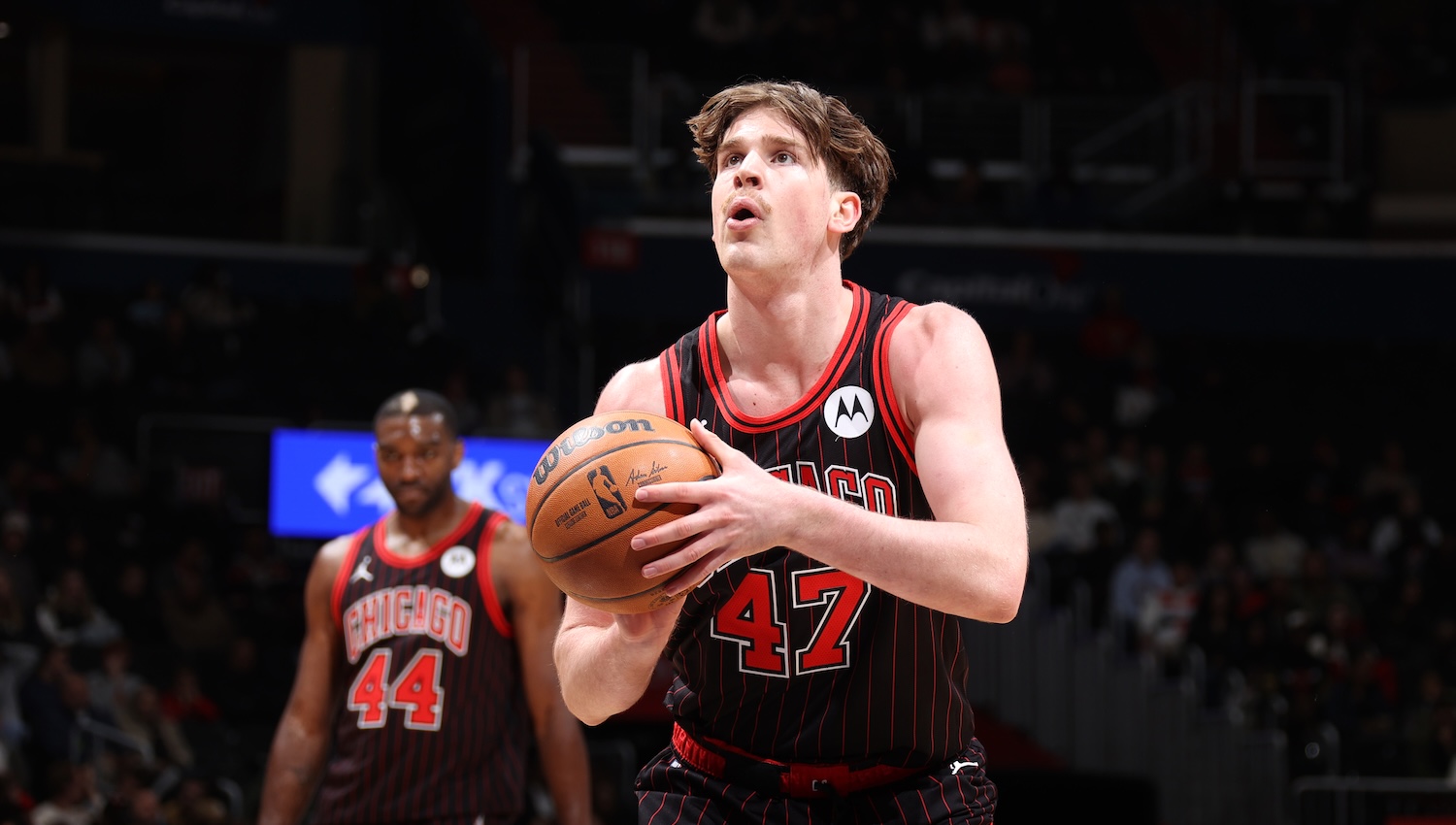
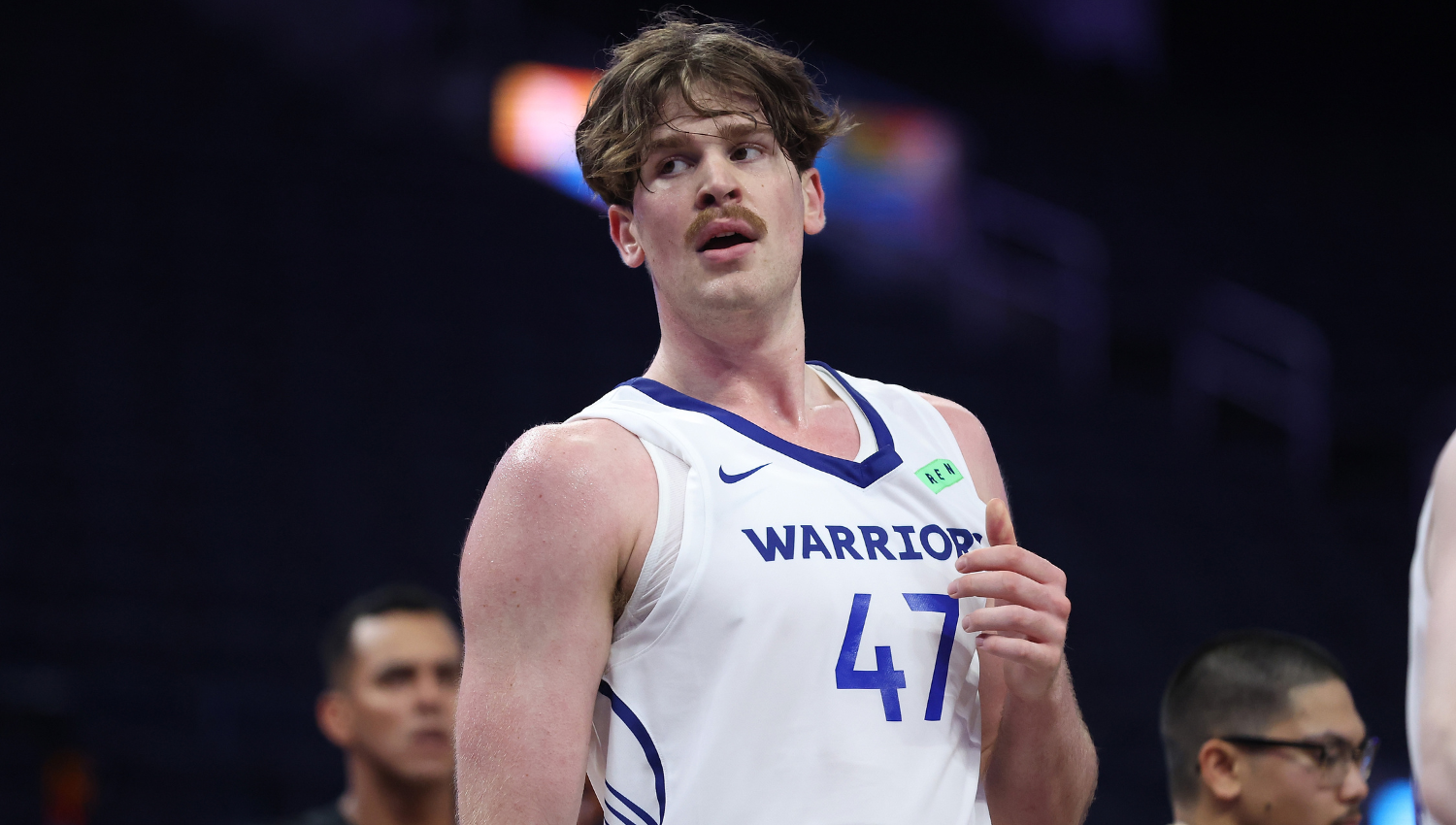
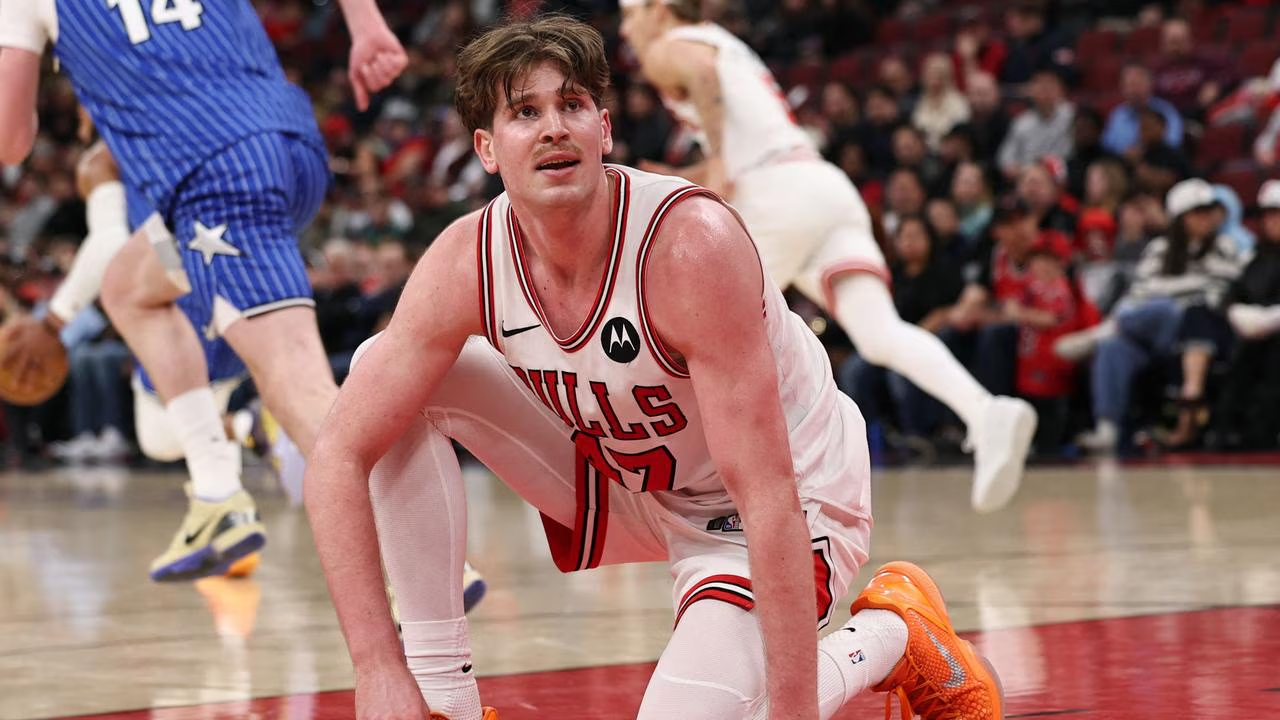
Australian forward Lachlan Olbrich #47 of the Chicago Bulls shoots a free throw against the Washington Wizards at Capital One Arena in Washington, DC, on April 8, 2026 (AEST). Photo: Stephen Gosling/NBAE via Getty Images
B.League in Japan: A comprehensive guide to Asia's premier professional basketball competition
- Nine Australians are in Japan's B.League, four playing and five coaching
- Vickerman has the champions, and three more Australians are head coaches
- Trevor Gleeson went the other way, home to the Adelaide 36ers for NBL27
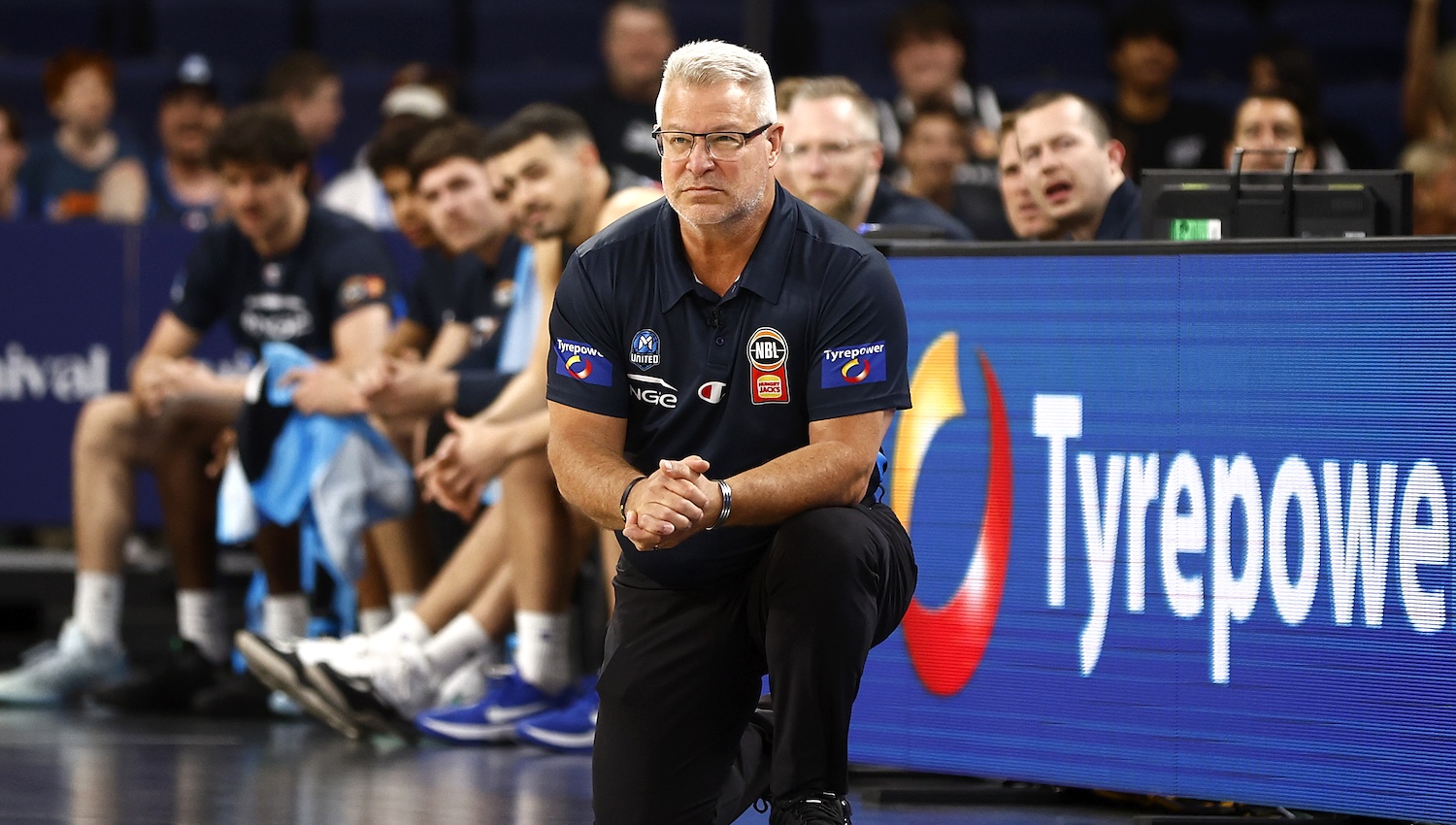
Australian coach Dean Vickerman takes charge of the reigning Japanese champions this season as one of nine Australians now working in the B.League, four of them playing and five coaching.
That is a bigger footprint than Australia has ever had in Japan, and it has arrived in the season the league rebuilt itself. The competition is now called B.League Premier, it has 26 clubs, it has scrapped relegation, it has capped salaries, and it has just made an import considerably more valuable by allowing all three of a club's foreign players on court at once.
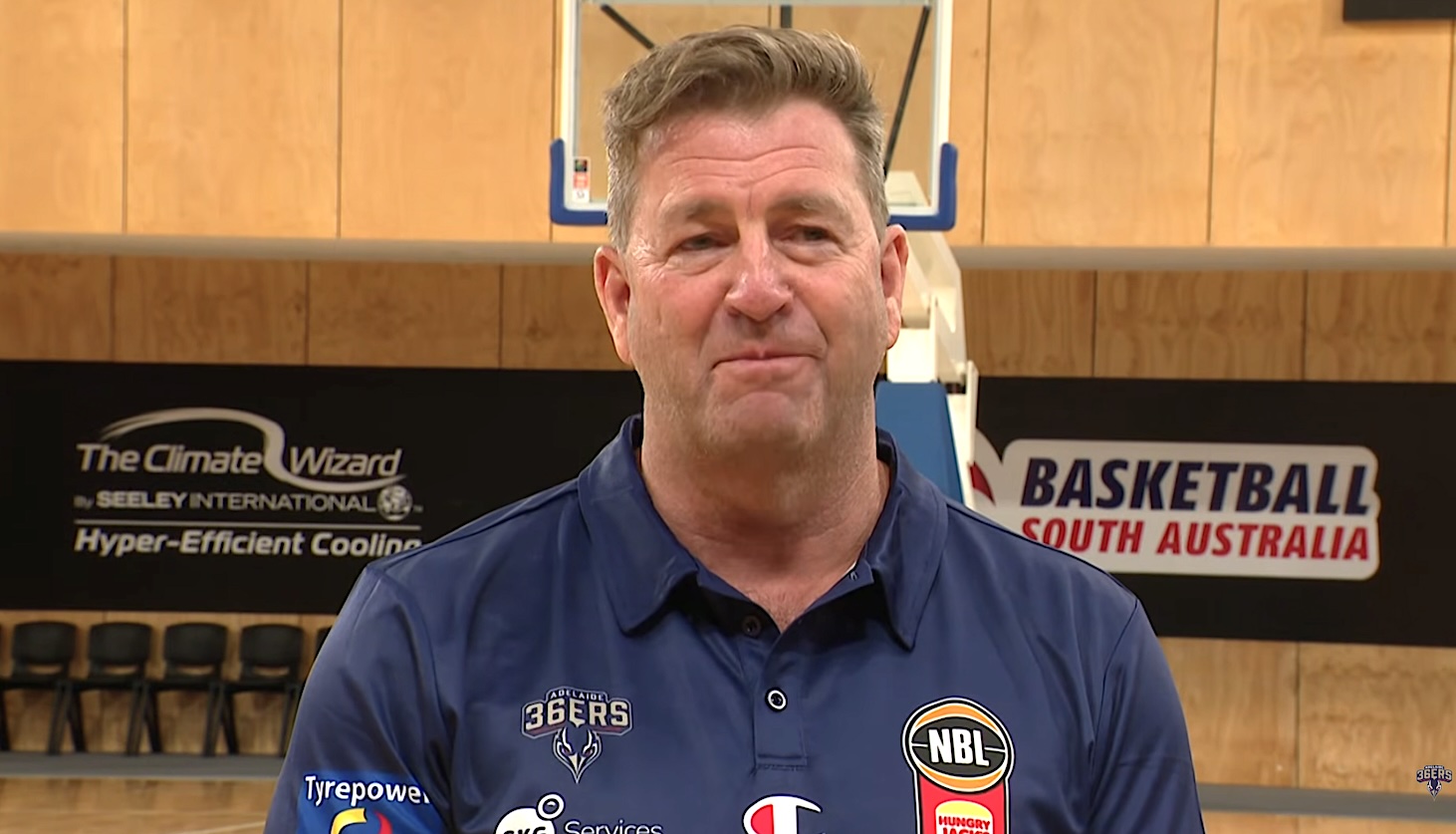
Vickerman, 54, has the best job of the nine. Nagasaki Velca won their first championship last season, and they did it by knocking Trevor Gleeson's Chiba Jets out of the playoffs 2-0 along the way. Gleeson has since come home to coach the Adelaide 36ers, so in one off-season an Australian left Japan beaten by the club another Australian now runs.
Australians in the B.League
Players
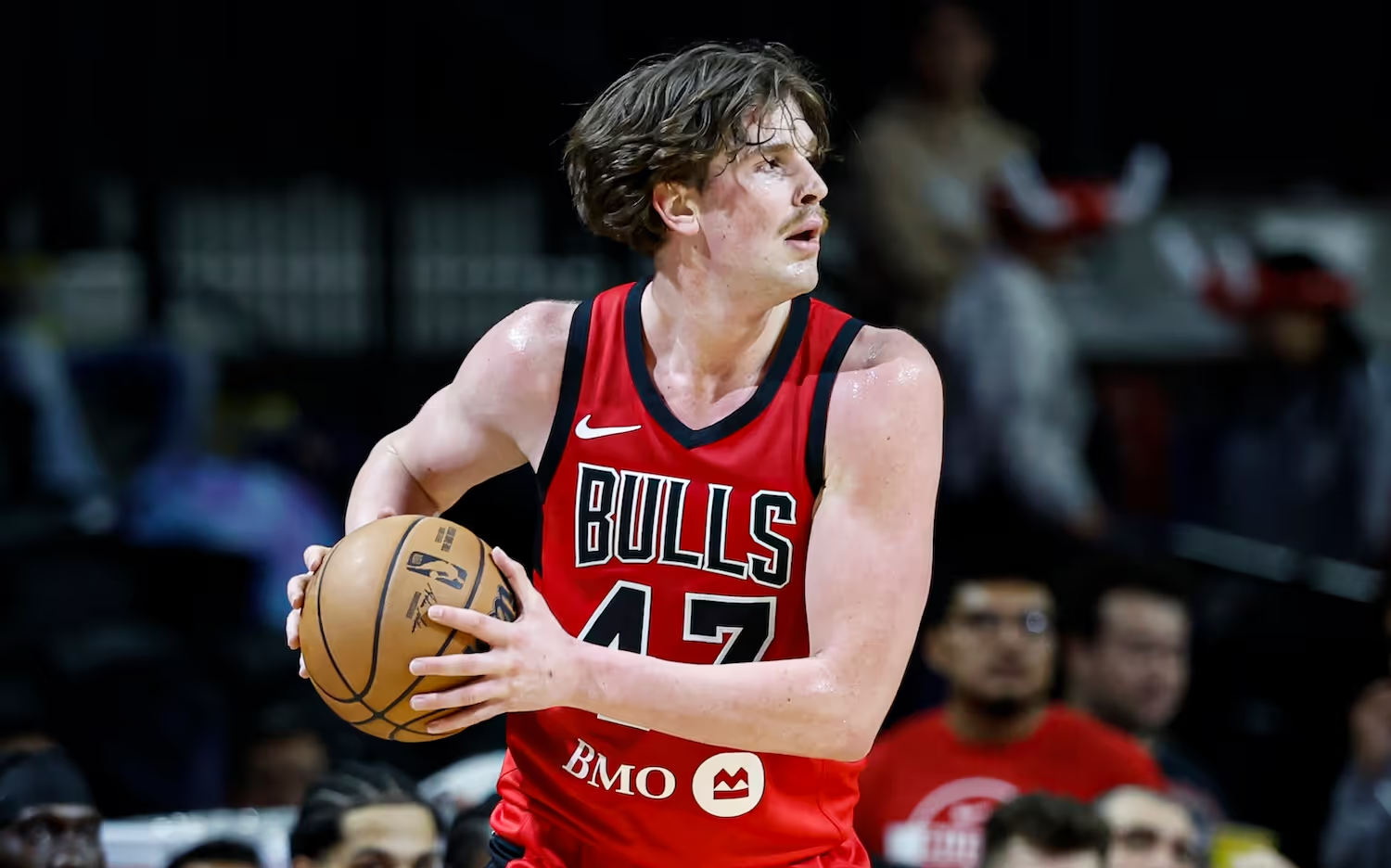
- Lachlan Olbrich – Alvark Tokyo, B.Premier. The former Illawarra and Chicago Bulls big man signed a one-year deal as one of the highest-paid imports in the league.
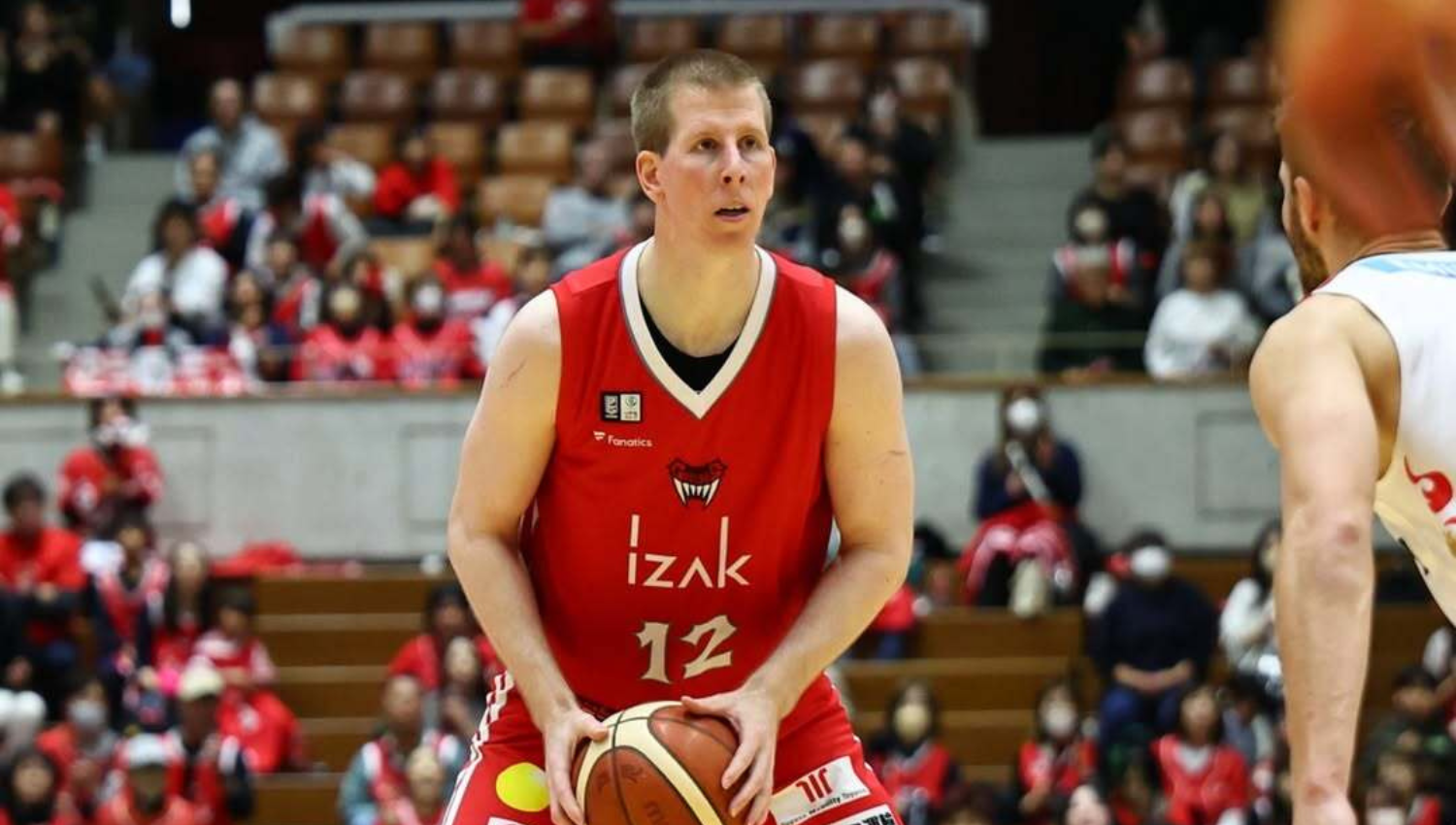
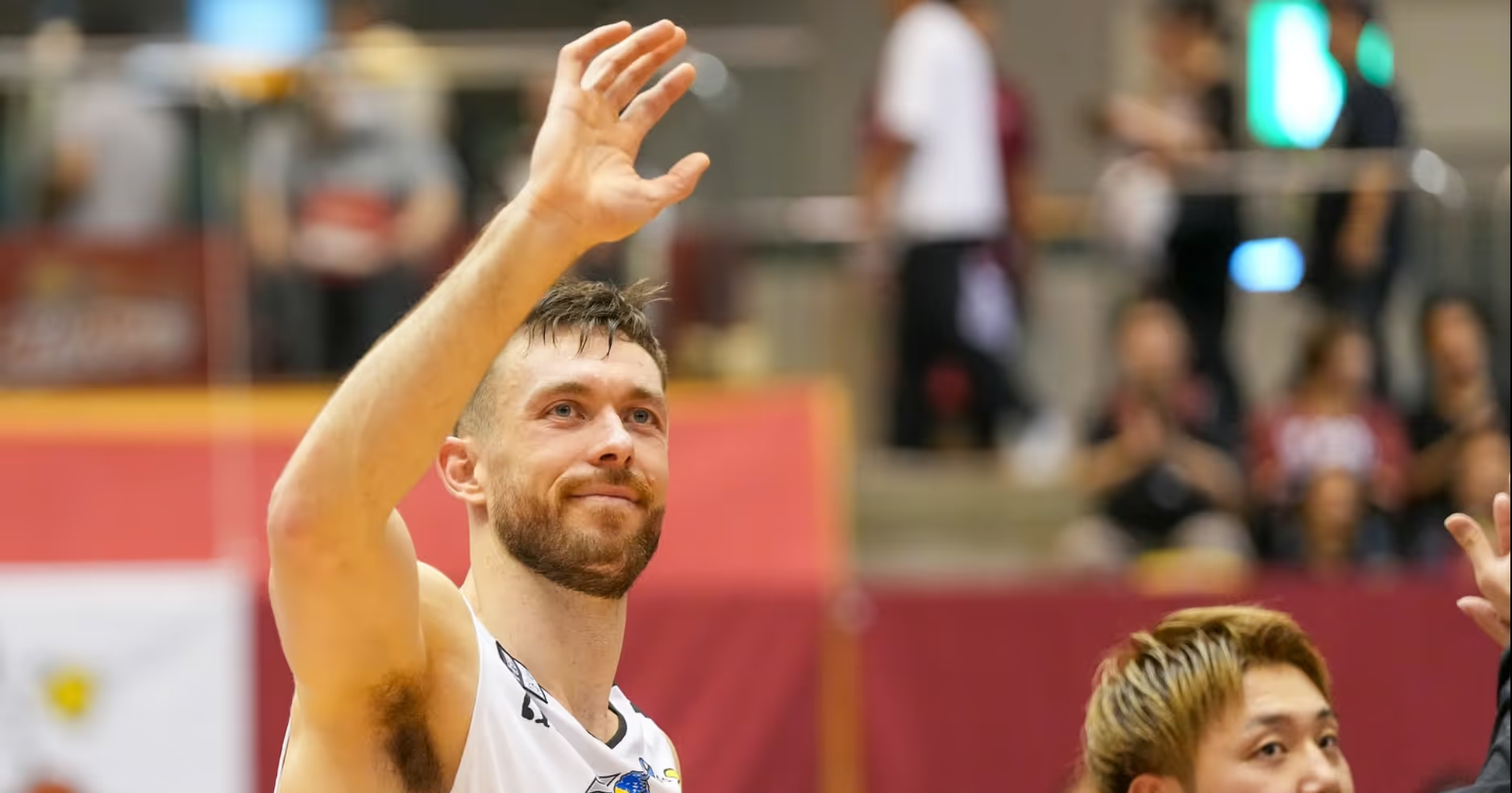
- Nick Kay – Shimane Susanoo Magic, B.Premier. Into a sixth straight season at the club, and the most established Australian in Japan.
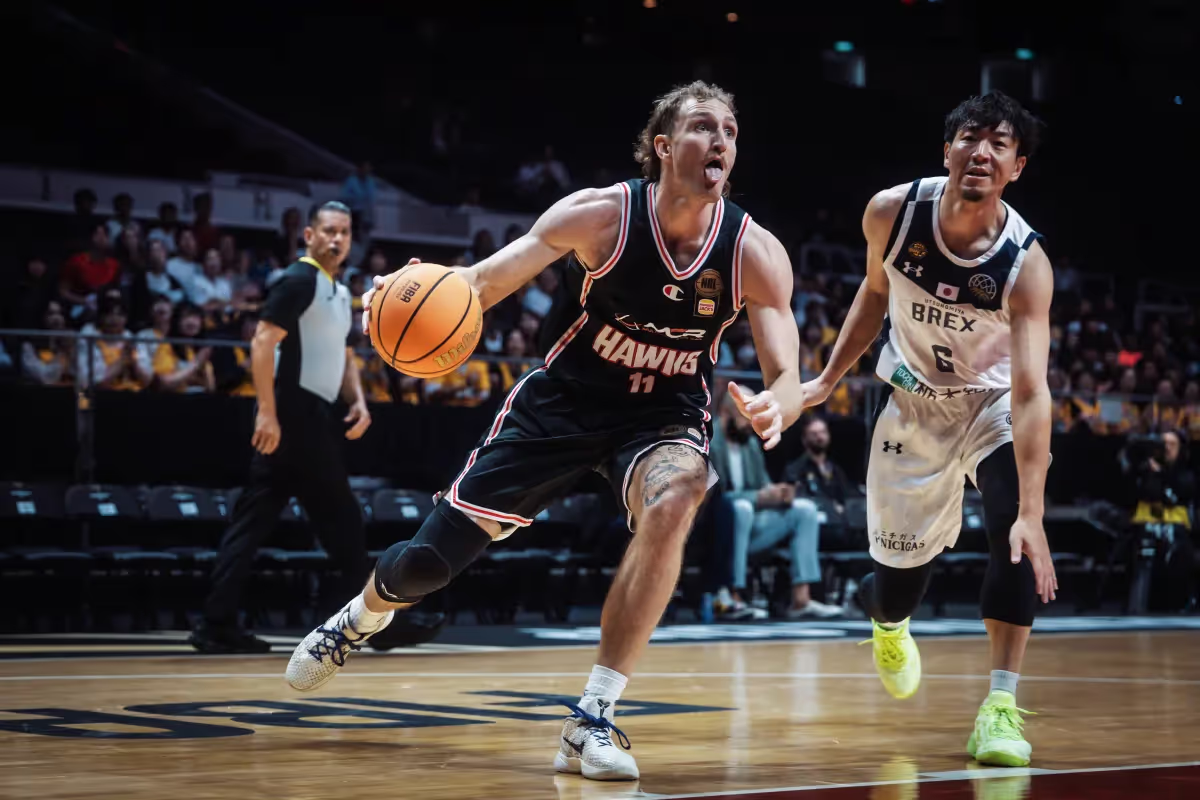
- Harry Froling – Tachikawa Dice, B.League One. The 2019 NBL Rookie of the Year signed on August 7 and wears 11.
- Rhys Vague – Tokyo Hachioji BeeTrains, B.League One. The Willetton product signed on August 4 after seasons at Kagawa and Tokyo United.
Coaches
- Dean Vickerman – Nagasaki Velca, B.Premier. Head coach. Left Melbourne United to take over the reigning Japanese champions.
- Shawn Dennis – Tokyo Sunrockers, B.Premier. Inaugural head coach of the rebranded club, after four seasons at Shiga and five at Nagoya.
- Andrej Lemanis – Altiri Chiba, B.Premier. Head coach since 2021, continuing, having taken the club up through the tiers.
- Mick Downer – Akita Northern Happinets, B.Premier. Head coach, continuing, after being promoted mid-season last year.
- Andy Lim – Nagasaki Velca, B.Premier. Assistant coach, arriving with Vickerman from Melbourne United.
There is a sixth Australian coaching in Japanese basketball who does not have a club job. Damian Cotter coaches B.League United, the league's young-player select side, which toured Australia during the NBL27 pre-season.
Former NBL players
Eighteen of them are not already on the list above. The four Australians who are, Olbrich, Kay, Froling and Vague, belong on both.
- D.J. Newbill – Altiri Chiba. New Zealand Breakers 2017-18, then Cairns Taipans for two seasons. 86 NBL games, and the league's Best Defensive Player in 2020.
- Dererk Pardon – Altiri Chiba. New Zealand Breakers 2022-23, All-NBL Second Team.
- Brandon Ashley – Altiri Chiba. New Zealand Breakers 2019-20, then South East Melbourne Phoenix in 2021-22.
- Yudai Baba – Nagasaki Velca. Melbourne United in 2020-21, and an NBL champion in his one season there.
- Jarrell Brantley – Nagasaki Velca. New Zealand Breakers 2022-23, and the club's MVP that season.
- Akil Mitchell – Nagasaki Velca. New Zealand Breakers 2016-17.
- Levi Randolph – Nagasaki Velca. New Zealand Breakers 2020-21, signed mid-season.
- Finn Delany – Ibaraki Robots. Seven seasons at the New Zealand Breakers, then Melbourne United in 2025-26. 215 NBL games, comfortably the most of anyone on this list.
- Tim Soares – Ibaraki Robots. Sydney Kings in 2022-23 and again in 2025-26, a two-time NBL champion.
- Vic Law – Ibaraki Robots. Brisbane Bullets 2020-21, Perth Wildcats 2021-22.
- D.J. Hogg – Alvark Tokyo. Cairns Taipans 2022-23, Sydney Kings 2023-24.
- Trey Kell III – Utsunomiya Brex. South East Melbourne, Adelaide and Illawarra across three seasons, an NBL25 champion and All-NBL First Team.
- Isaac Fotu – Utsunomiya Brex. One game for the New Zealand Breakers in 2011-12, as a development player.
- Yanni Wetzell – Akita Northern Happinets. South East Melbourne Phoenix 2020-21, New Zealand Breakers 2021-22.
- Marcus Lee – Shinshu Brave Warriors. Melbourne United, Tasmania JackJumpers, Melbourne United again and then Cairns, with a championship at Tasmania.
- Charles Jackson – Kyoto Hannaryz. New Zealand Breakers 2015-16.
- Christopher Smith – Hiroshima Dragonflies. Brisbane Bullets 2023-24.
- Gary Clark – Levanga Hokkaido. Illawarra Hawks 2023-24.
One thing that list makes plain. Ten of the eighteen came through the New Zealand Breakers, more than three times what any Australian club has sent, and it is a reminder that the NBL's pipeline into Japan runs through Auckland as much as anywhere.
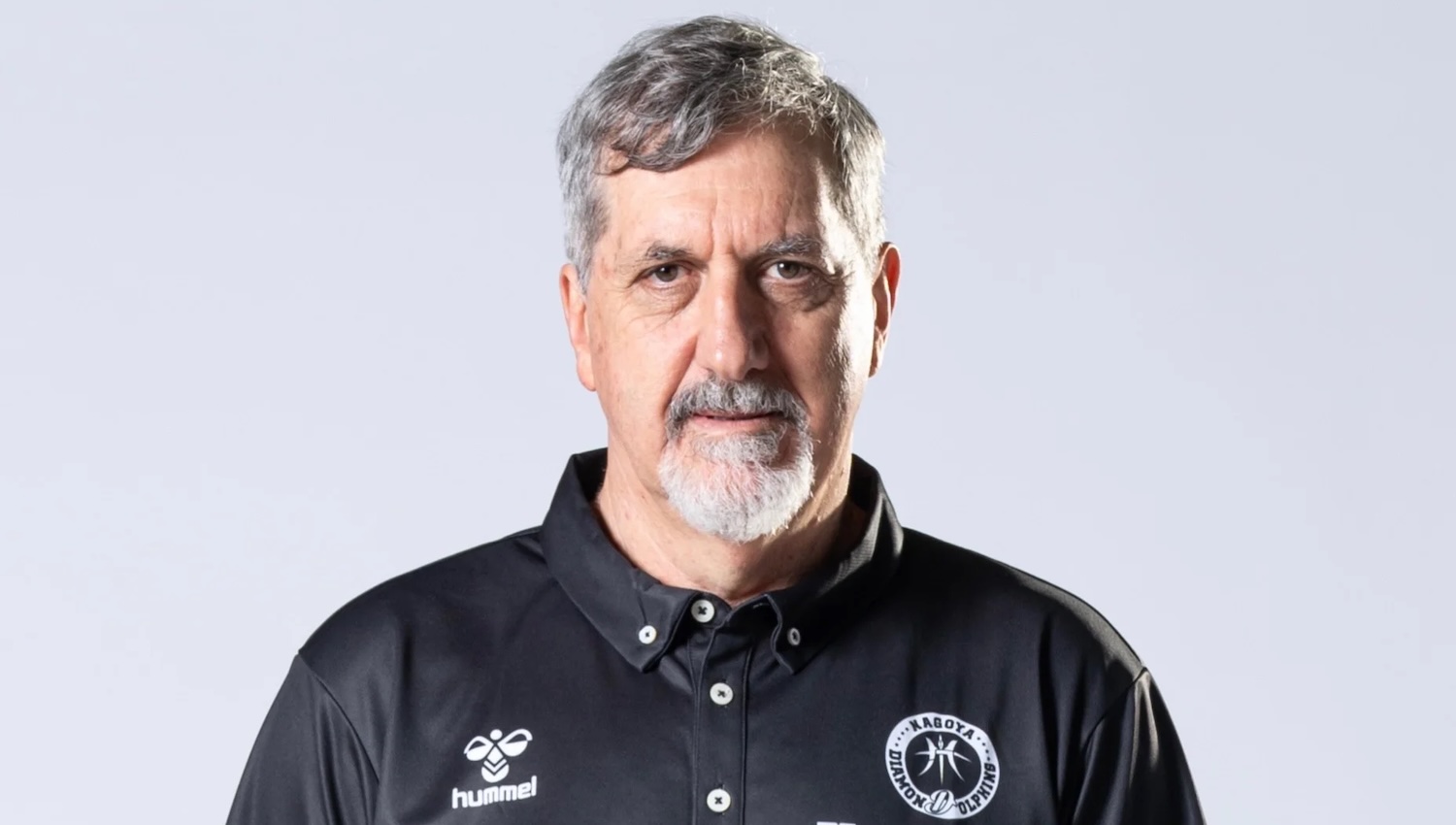
Vickerman did not leave Melbourne United because he was pushed.
"I've kind of done these cycles of three years and, you know, the first three years as head coach in New Zealand, we won a championship and went to two grand finals," he told Jason Cadee on Cut to the Jase in an exclusive interview with basketball.com.au.
"The first three in Melbourne, same thing. The second three in Melbourne, same thing.
"Then this third three, we go to two championship games and miss out last year, and it's kind of like 'oh, I did fail'. To me, I failed these last three years because I didn't bring a championship to the club.
"So there was a part of like, yeah it's time for someone else to reinvent this and to do it different."
The four players are split across two divisions. Lachlan Olbrich is at Alvark Tokyo in B.Premier, one year on from a two-way deal with the Chicago Bulls and reported to be among the highest-paid imports in the league. Nick Kay is at the Shimane Susanoo Magic, into a sixth straight season there and the most settled Australian in the country. Below them, Harry Froling signed with the Tachikawa Dice on August 7 and Rhys Vague with the Tokyo Hachioji BeeTrains on August 4, both in B.League One.
Australia is not on the B.League's Asian quota list, so each of the four takes up one of his club's three import places rather than a cheaper slot. They are there on the same terms as an American.
The coaching group is the deeper story. Shawn Dennis has taken the longest road of any of them: the 2016 NBL Coach of the Year with the Townsville Crocodiles, he went to Japan in 2017, spent four seasons at the Shiga Lakestars and five at the Nagoya Diamond Dolphins, and now has the newly rebranded Tokyo Sunrockers.
"We will aim to play a disruptive defence that helps ignite a high-tempo offence," Dennis said.
Andrej Lemanis has been at Altiri Chiba since 2021 and has climbed the pyramid with them, taking a club founded in 2020 through the lower tiers to a B2 championship in 2024-25 and into the top division this season. He is a two-time NBL Coach of the Year who won three titles with the New Zealand Breakers and coached the Boomers to fourth at the Rio Olympics.

Mick Downer got his job in the least comfortable way available. After more than 25 years as an assistant, at Perth, Cairns, Brisbane, Adelaide and with the Boomers, he was promoted at the Akita Northern Happinets just before New Year, with the club last on the ladder and long-serving coach Kenzo Maeda stepping down after a Christmas Eve loss. He has kept the job.
"We're building a life here in Japan, I don't see us leaving anytime soon," Downer told basketball.com.au. "I know for the rest of my life, I'll coach this game at some level."
The fifth is Andy Lim, who has gone to Nagasaki as Vickerman's assistant after four years at Melbourne United, which means the reigning champions of Japan now have an Australian head coach and an Australian assistant.
There is a tenth Australian in Japanese basketball who does not have a club job. Damian Cotter coaches B.League United, the league's young-player select side, which toured Australia during the NBL27 pre-season and played both Melbourne United and South East Melbourne Phoenix.
Read the whole thing together and the direction is hard to miss. A league a short flight away has just guaranteed its clubs their division, published a salary cap that runs to about AUD 8.5 million, and loosened the rule that limited how many imports could be on the floor. Nine Australians are already there, and the one who came back the other way needed the Adelaide job and a reunion with Bryce Cotton to do it.
The NBL should probably read that as a warning rather than a coincidence.
The Birth of the B.League: Uniting Japanese Basketball
Japan's B.League has spent the past decade turning itself into the third professional sport in the country, behind baseball and football. For 2026-27 it has done something more drastic, and Australians have a bigger stake in it than at any point since the league began.
The top division is now called B.League Premier, or B.Premier. It has 26 clubs, no promotion, no relegation, a salary cap and an import rule that has been loosened rather than tightened. The league calls the whole package B.Kakushin, which it renders in English as B.Innovation, and it has been building towards it since announcing the outline in July 2023.
Commissioner Shinji Shimada put it plainly on the league's own site, describing the reform as delivering "the abolition of promotion and relegation based on competitive results", "the realisation of dream arenas" and "the introduction of a salary cap", and producing a league "unlike any other in Japan or indeed the world".
Here is what actually changed.
What B.Innovation does
The headline is the end of promotion and relegation. Until now the B.League worked like European football, with clubs moving between divisions based on results. From this season a club's division is settled by a licence, judged on business stability and playing standard, and it does not move because of a bad year. The league's argument is that relegation risk pushed clubs to spend on the roster at the expense of the business, and that permanent membership lets them invest for the long term instead.
The second change is a salary cap, and the numbers are public. A B.Premier club may spend between 500 million and 800 million yen on players, roughly AUD 5.3 million to 8.5 million. B.League One runs a 400 million ceiling. B.League Next has no cap at all. The minimum salary in B.Premier is 8 million yen. There is a star-player clause that counts one player earning above 150 million yen as 150 million, which is the mechanism that lets a club keep a marquee name without it swallowing the cap.
The third is the one Australians should care about most. B.Premier clubs may still register only three foreign players, but all three may now be on court at the same time, where the old rule allowed two. The floor is one Japanese player on the floor. B.League One and B.League Next keep the two-at-a-time rule and a floor of two Japanese players. That single change makes an import in the top division considerably more valuable than he was last season.
Japan is also introducing a draft, and new roster quotas that sit outside the normal limits for players who came through a club's own under-15 and under-18 programs. The post-season has been reshaped too: the B.Premier final is now a best-of-five, first to three wins, rather than the best-of-three that decided every round before.
The three divisions
B.Premier has 26 clubs, split 13 and 13 between an Eastern and a Western Conference, and each club plays 60 games. Below it, B.League One has 25 clubs and will send 16 of them to its playoffs. B.League Next has four. That is 55 clubs across the pyramid.
There is a continental competition sitting on top of it. Three B.League clubs qualify each season for the East Asia Super League, a 12-team champions league drawing from Japan, Korea, Chinese Taipei, the Philippines, Hong Kong, Macau and Mongolia. Alvark Tokyo, Ryukyu Golden Kings and Utsunomiya Brex held the Japanese places in 2025-26, and Chiba Jets won the whole thing in 2023-24.
How Japan got here
The league's own account of its founding is blunt about the mess it replaced: a sport split across two competitions, the national federation suspended from international basketball, and clubs going broke one after another.
For decades Japanese basketball ran on corporate teams, where players were company employees first. A rival professional competition, the bj league, launched in 2005 and ran an American-style franchise model alongside the federation's own competition, which was rebranded as the JBL in 2007 and again as the NBL in 2013. By 2015 there were 45 clubs spread across two leagues that did not talk to each other.
FIBA lost patience and suspended Japan from international competition in November 2014. The merger that followed created the B.League, which was established in July 2015, confirmed 36 clubs for its first two divisions in August, and settled its name and its first chairman, Masaaki Okawa, in September. The first B1 game was played on September 22, 2016.
Tochigi Brex won the first championship. Alvark Tokyo took the next two. The 2019-20 season was abandoned outright in March 2020 with no champion awarded. Chiba Jets won in 2020-21, then Utsunomiya Brex in 2021-22, Ryukyu Golden Kings in 2022-23, Hiroshima Dragonflies in 2023-24 and Utsunomiya again in 2024-25, a record third title for a club that won its first under its old name, Tochigi. Nagasaki Velca won their first last season, which is why Dean Vickerman taking that job matters more than a coaching change usually would.
The Australian connection is getting shorter
The two leagues are quietly merging their calendars. The Perth Wildcats play the Chiba Jets on Tuesday, September 8 and the Ryukyu Golden Kings on Thursday, September 10 at Okinawa Suntory Arena, both at 7:35pm local, which is 6:35pm in Perth and 8:35pm on the east coast. It is the third consecutive year Perth have played B.League opposition.
The traffic runs the other way as well. A Japanese select side, B.League United, toured Australia during the NBL27 pre-season and played both Melbourne United and South East Melbourne Phoenix. It is coached by an Australian, Damian Cotter.
How to follow it
B.Premier tips off on Tuesday, September 22, 2026, when Alvark Tokyo host the Ryukyu Golden Kings at Toyota Arena Tokyo at 2:00pm local, which is 3:00pm AEST. Lachlan Olbrich's club, in the first game of the new competition.
One thing to watch on the clock. Japan is one hour behind eastern Australia until daylight saving starts here on Sunday, October 4, and two hours behind after it. A 7:05pm tip in Tokyo is 8:05pm on the east coast in September and 9:05pm from October.








.avif)