
1
Jul
Team Profile
Chicago Bulls: Five things you need to know

Image created using AI technology
Chicago Bulls: The standard every NBA franchise still measures itself against
- Six-time NBA champions, the Bulls built basketball's greatest dynasty behind Michael Jordan and Scottie Pippen.
- Australian legends Luc Longley, Josh Giddey and Lachlan Olbrich all feature in the franchise's history.
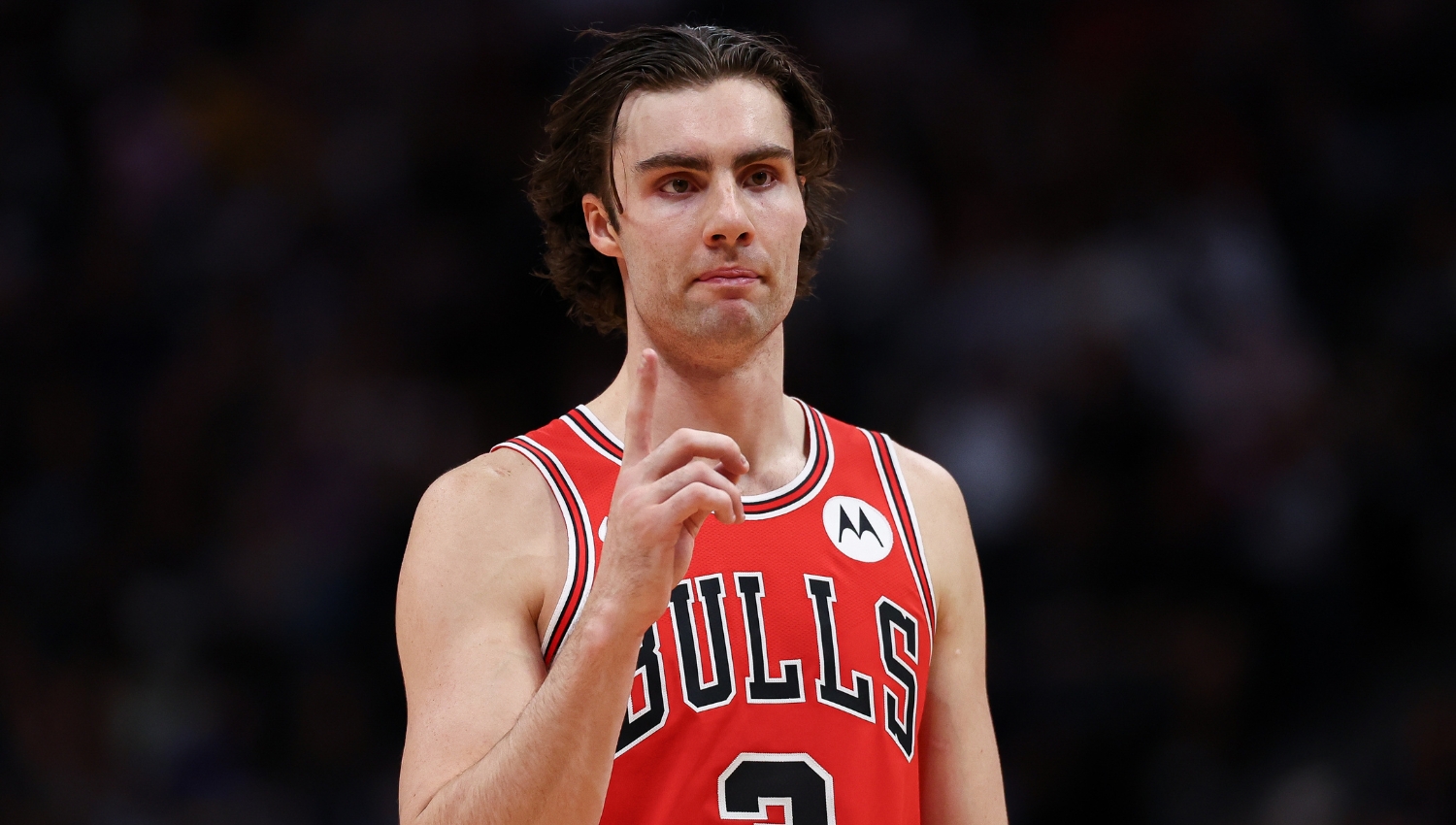
- Chicago is rebuilding around Josh Giddey and one of the NBA's youngest, most promising cores.
For Australian basketball fans, no NBA franchise carries greater significance than the Chicago Bulls.
It was in Chicago that Melbourne-born Luc Longley became the first Australian to win an NBA championship, playing a pivotal role alongside Michael Jordan, Scottie Pippen and Dennis Rodman during the Bulls' legendary second three-peat. Nearly three decades later, another Victorian is helping write the franchise's next chapter, with Josh Giddey becoming the centrepiece of Chicago's latest rebuild.
Few teams in professional sport have changed basketball like the Bulls.
Before Michael Jordan arrived, Chicago was a young expansion franchise still searching for an identity. By the end of the 1990s, the Bulls had become a global phenomenon. Six NBA championships, two separate three-peats and a style of basketball built on relentless competitiveness transformed the organisation into one of the world's most recognisable sporting brands.
The Jordan era set a standard that has shaped every generation since.
From Derrick Rose becoming the youngest MVP in NBA history to today's rebuild around Giddey and an exciting young core, every Bulls team has lived in the shadow of one of basketball's greatest dynasties.
For Chicago, the challenge has never been building another good team.
It has always been trying to live up to greatness.

Australians who have played for the Chicago Bulls
Australia's relationship with the Bulls is unlike any other NBA franchise.
Luc Longley
Luc Longley changed Australian basketball forever.
After arriving in Chicago before the 1994-95 season, the Melbourne-born centre became the first Australian to start for an NBA championship team and the first to win an NBA title.
Longley was the starting centre throughout the Bulls' second championship three-peat, providing size, passing and defensive stability while complementing Michael Jordan, Scottie Pippen and Dennis Rodman.
His success inspired generations of Australian players and remains one of the defining moments in Australian basketball history.
Josh Giddey
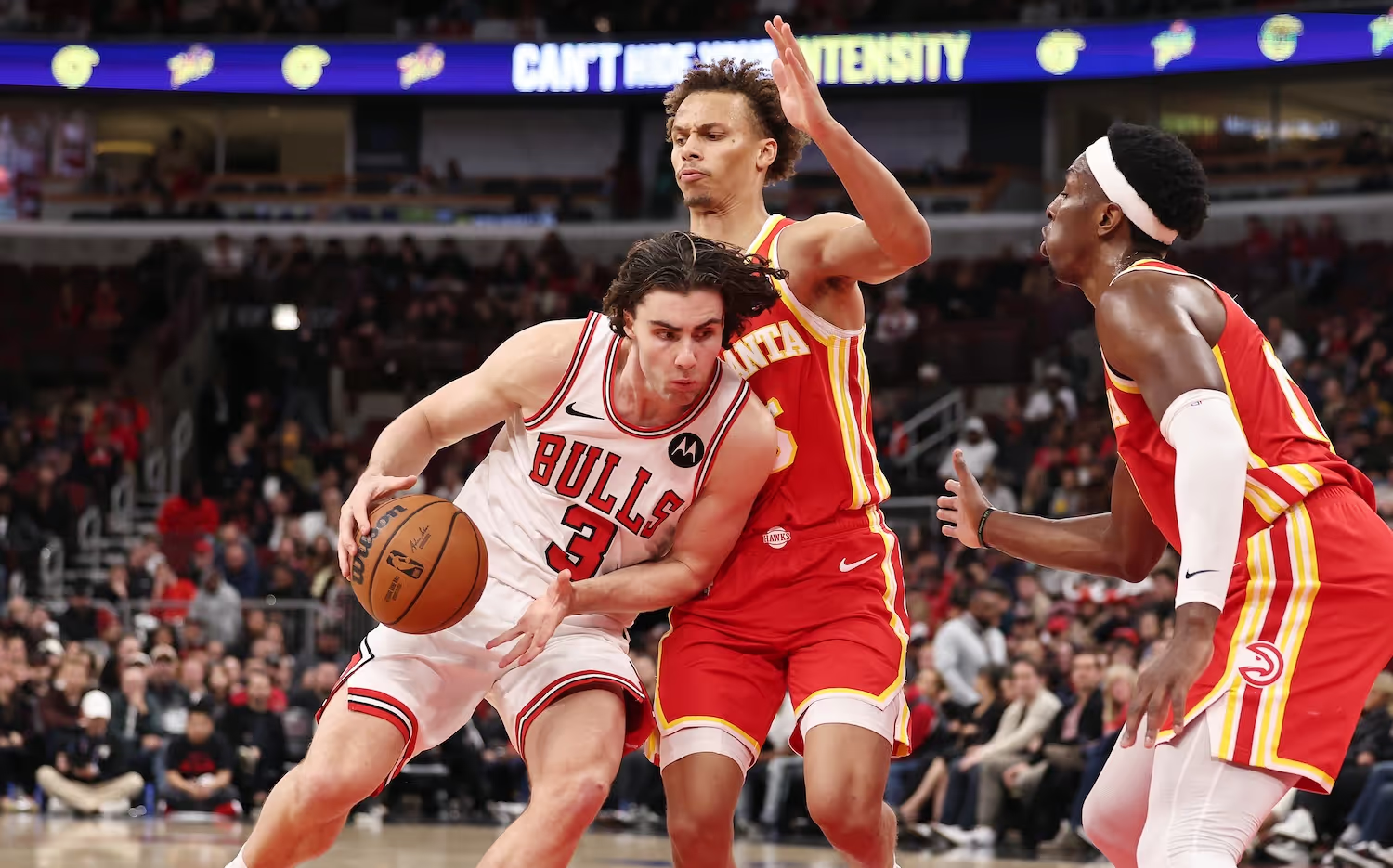
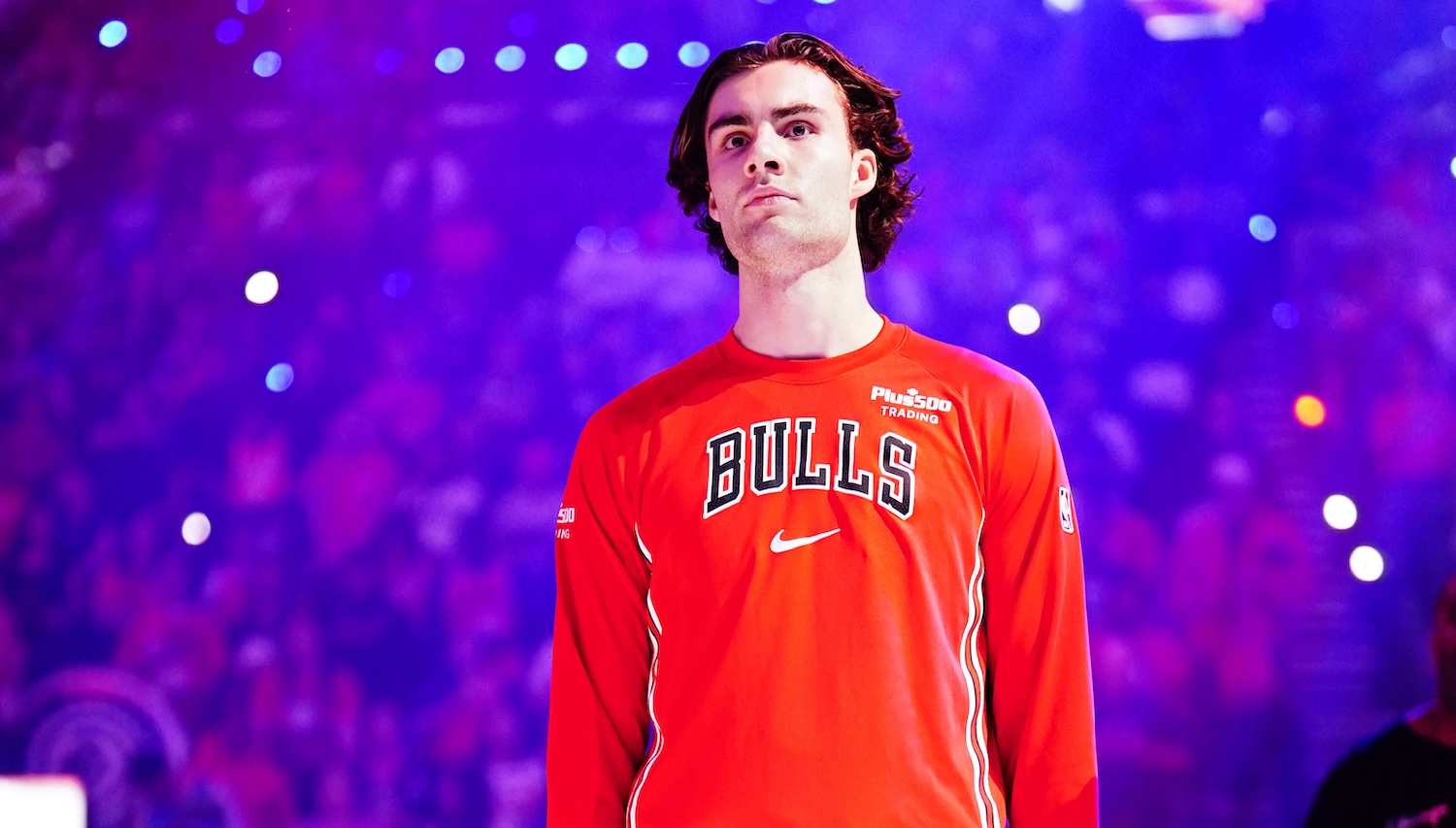
Josh Giddey arrived in Chicago in 2024 following a blockbuster trade with the Oklahoma City Thunder.
The Victorian immediately became the Bulls' primary playmaker, showcasing the elite passing, rebounding and basketball IQ that made him one of Australia's brightest young stars.
As Chicago entered another rebuild during 2026, Giddey emerged as one of the franchise's foundational players, with the organisation committing to building its future around his unique all-round game.
Lachlan Olbrich
South Australian forward Lachlan Olbrich joined the Chicago Bulls in 2026 after establishing himself as one of Australia's most promising young big men. After starring in the NBL with the Illawarra Hawks and earning opportunities Olbrich signed with Chicago as a two-way player in 2025-26. He's known for his high basketball IQ, physicality and passing ability.
Chris Anstey
Melbourne-born Chris Anstey spent the 1999-2000 season with the Bulls following the breakup of the championship dynasty.
A skilled shooting big man, Anstey appeared in 73 games during his lone season in Chicago.
Luke Schenscher
South Australian centre Luke Schenscher played 20 games for the Bulls during the 2005-06 season, providing frontcourt depth during Chicago's return to the playoffs.
Cameron Bairstow
Brisbane-born Cameron Bairstow joined the Bulls after being selected in the second round of the 2014 NBA Draft.
He spent two seasons with the franchise, appearing in 36 NBA games before continuing his professional career overseas.
From Longley's championships to Giddey's leadership, Australians have played meaningful roles across multiple generations of Bulls basketball.

2026-27 Team Snapshot
The Chicago Bulls are entering a new chapter after a dramatic reset of both their roster and front office.
Following a 31-51 season in 2025-26 and a fourth straight year without a playoff appearance, Chicago parted ways with executive vice president Artūras Karnišovas, general manager Marc Eversley and head coach Billy Donovan. Bryson Graham was appointed executive vice president of basketball operations before the franchise hired former NBA champion Tiago Splitter as head coach to oversee a youth-focused rebuild.
The Bulls continued reshaping their roster throughout 2026. At the trade deadline they acquired Rob Dillingham and Leonard Miller from Minnesota, Collin Sexton and Ousmane Dieng from Charlotte, Mike Conley Jr., Jaden Ivey and Dario Šarić in separate deals, while stockpiling future draft picks. Although Ivey was later waived and veteran centre Nic Claxton arrived from Brooklyn in July, the clear priority became surrounding Josh Giddey with young talent capable of growing together.
Chicago's long-term core now features Giddey, Matas Buzelis, Nic Claxton, Rob Dillingham, Caleb Wilson, Noa Essengue, Patrick Williams and Dailyn Swain. The Bulls also added rugged forward Tobe Awaka on a two-way contract as they continued building one of the NBA's youngest rosters.
Rather than chasing short-term success, Chicago has fully embraced player development, defensive versatility and long-term roster flexibility in the hope of constructing the franchise's next championship contender.

Why the Bulls matter
Every NBA franchise has a defining story.
The Celtics built the league's first dynasty.
The Lakers became basketball's glamour franchise.
The Spurs mastered sustained excellence.
The Bulls changed basketball forever.
Michael Jordan's arrival transformed not only Chicago but the NBA itself. The Bulls helped take professional basketball from an American sport to a global phenomenon, inspiring millions of fans and players around the world.
Their iconic red jersey became instantly recognisable. The charging bull logo became one of the most famous symbols in world sport. The championship teams of the 1990s redefined what excellence looked like, combining talent, preparation, toughness and selflessness under legendary coach Phil Jackson.
Every championship team since has been compared to the Bulls.
Few have matched them.
Michael Jordan built basketball's greatest dynasty
The Bulls existed before Michael Jordan.
Basketball history changed when he arrived.
Selected with the third overall pick in the 1984 NBA Draft, Jordan quickly established himself as one of the league's brightest stars before developing into the greatest player the game has ever seen.
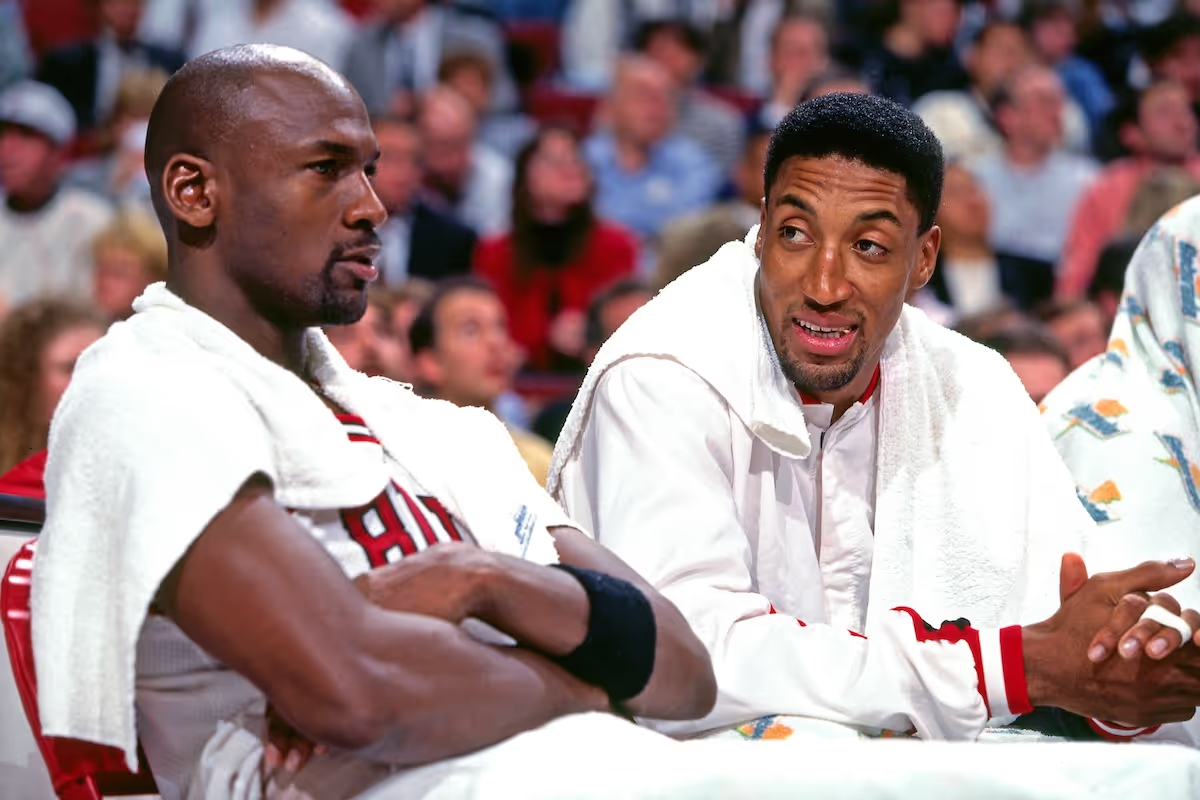
Under Phil Jackson's leadership and powered by the Triangle Offence, Jordan, Scottie Pippen and later Dennis Rodman built a dynasty unlike anything the modern NBA had witnessed.
Chicago won three consecutive championships between 1991 and 1993 before Jordan's temporary retirement brought the run to an end.
When he returned in 1995, the Bulls became even better.
The 1995-96 team won 72 regular-season games, an NBA record at the time, before capturing another championship. Two more titles followed in 1997 and 1998, completing a second three-peat and cementing Chicago as one of the greatest dynasties in sporting history.
Those six championships were never simply about winning.
They created a culture that still defines the Bulls today.
Luc Longley's place in Bulls history
While Michael Jordan remains the face of the dynasty, Australian basketball has its own place in Bulls folklore.
Luc Longley arrived in Chicago before the second championship run and became the perfect fit for Phil Jackson's system. His passing ability, basketball IQ and willingness to sacrifice individual statistics for team success made him an essential piece of one of the greatest teams ever assembled.
Longley started all three championship seasons from 1996 to 1998, becoming the first Australian to win an NBA championship and paving the way for future generations of Australians to believe they belonged in the NBA.
For Australian basketball fans, no image is more iconic than Longley standing alongside Jordan, Pippen and Rodman as the Bulls celebrated another title.
It remains one of the defining moments in Australian sporting history.
Derrick Rose gave Chicago hope again
Replacing Michael Jordan was always going to be impossible.
But for a brief period, Derrick Rose made Bulls fans believe another championship window had arrived.
Selected first overall in the 2008 NBA Draft, the Chicago native quickly became the face of the franchise. His explosive athleticism, fearless drives to the basket and ability to deliver in big moments electrified the United Center.
In 2011, Rose became the youngest Most Valuable Player in NBA history at just 22 years old after leading Chicago to a league-best 62-20 record.
Under head coach Tom Thibodeau, the Bulls returned to the Eastern Conference Finals for the first time since the Jordan era, combining Rose's brilliance with one of the NBA's stingiest defences.
Unfortunately, injuries cruelly cut short what appeared destined to become another great Bulls dynasty.
Although Rose never again reached those heights, he remains one of the most beloved players in franchise history and a symbol of resilience for an entire generation of Chicago fans.
Building the next generation
The years following Derrick Rose saw Chicago searching for another cornerstone.
Jimmy Butler emerged as an All-Star before eventually being traded as the franchise began another rebuild. Zach LaVine and DeMar DeRozan kept the Bulls competitive, but sustained playoff success remained elusive.
The next turning point came in 2024 when Chicago acquired Australian point guard Josh Giddey from the Oklahoma City Thunder.
Rather than chasing established stars, the Bulls committed to youth.
That philosophy accelerated dramatically during 2026. A sweeping front-office overhaul brought Bryson Graham to lead basketball operations and Tiago Splitter as head coach, while the roster was reshaped around young talent including Giddey, Matas Buzelis, Rob Dillingham, Caleb Wilson, Dailyn Swain, Noa Essengue and Nic Claxton.
It marked the beginning of another rebuild—but one designed with patience rather than urgency.
For the first time in years, Chicago has embraced the idea that sustainable success will come through development rather than blockbuster acquisitions.
Greatest Bulls of all time
Few franchises can match the list of legends who have worn a Bulls uniform.
Michael Jordan remains the greatest player in franchise history and, for many, the greatest basketball player of all time. Six championships, six Finals MVP awards and an unmatched competitive spirit transformed both the Bulls and the NBA forever.
Scottie Pippen was the perfect teammate, becoming one of basketball's greatest two-way forwards while helping define the modern point-forward role.
Phil Jackson's leadership and the revolutionary Triangle Offence created one of sport's greatest dynasties, while Dennis Rodman added rebounding, defence and relentless intensity to the championship teams.
Derrick Rose restored hope to Chicago by becoming the youngest MVP in league history, while Jimmy Butler carried the franchise through its next competitive era.
Australian Luc Longley occupies a unique place in Bulls history as the first Australian to win an NBA championship, while Josh Giddey now leads the franchise's newest generation and Lachlan Olbrich represents the latest Australian to join one of basketball's most iconic organisations.
Five Fast Facts
1. The Bulls won six NBA championships between 1991 and 1998, all with Michael Jordan.
2. Chicago is the only NBA franchise to win multiple NBA Finals without ever losing one.
3. The 1995-96 Bulls won 72 games, setting an NBA record that stood for 20 years.
4. Derrick Rose became the youngest NBA Most Valuable Player in history in 2011.
5. Australian Luc Longley won three NBA championships with Chicago during the Bulls' second three-peat.
Historical Timeline
- 1966: Chicago Bulls enter the NBA as an expansion franchise.
- 1975: Reach the Western Conference Finals for the first time.
- 1984: Draft Michael Jordan with the third overall pick.
- 1987: Draft Scottie Pippen.
- 1991: Win the franchise's first NBA championship.
- 1993: Complete the first championship three-peat.
- 1994: Acquire Australian centre Luc Longley.
- 1996: Win a then NBA-record 72 games before capturing a fourth championship.
- 1996-98: Longley becomes the first Australian to win an NBA championship, helping Chicago complete a second three-peat.
- 1998: Win a sixth NBA championship.
- 2008: Draft Derrick Rose with the No. 1 overall pick.
- 2011: Rose becomes the youngest MVP in NBA history.
- 2024: Acquire Australian guard Josh Giddey from Oklahoma City.
- 2026: Bryson Graham appointed executive vice president of basketball operations, Tiago Splitter hired as head coach and the franchise commits to a youth-led rebuild.
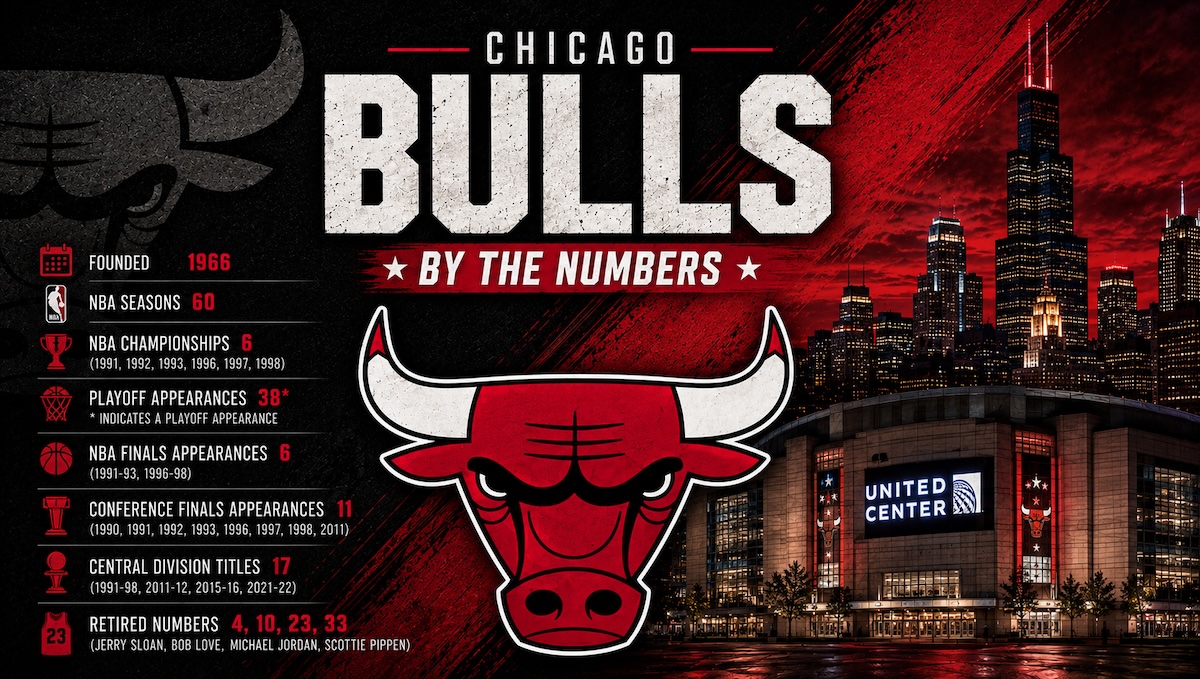
Franchise Records
- NBA Championships: 6 (1991, 1992, 1993, 1996, 1997, 1998)
- NBA Finals appearances: 6
- Conference championships: 6
- Division championships: 9
- Playoff appearances: 37
- Best regular-season record: 72-10 (1995-96)
- All-time leading scorer: Michael Jordan — 29,277 points
- All-time leading rebounder: Michael Jordan — 5,836 rebounds
- All-time assists leader: Michael Jordan — 5,012 assists
- All-time steals leader: Michael Jordan — 2,306 steals
- All-time blocks leader: Artis Gilmore — 1,029 blocks
- Retired numbers: 5 (plus the league-wide retirement of Michael Jordan's No. 23)
- Hall of Fame players: 30+
Looking ahead
No franchise in modern basketball carries greater expectations than the Chicago Bulls.
Six championships, two three-peats and the Michael Jordan era created a standard that few organisations in any sport have ever matched. Every generation since has been measured against that remarkable legacy.
Today's Bulls are writing a very different story.
Rather than chasing ageing superstars, Chicago has committed to building patiently around one of the NBA's youngest rosters. Josh Giddey has emerged as the franchise's lead playmaker, while Matas Buzelis, Caleb Wilson, Rob Dillingham, Dailyn Swain, Nic Claxton and fellow Australian Lachlan Olbrich represent the next wave of talent.
Under Tiago Splitter and Bryson Graham, the Bulls have embraced a long-term vision built on development, versatility and sustainable success.
The Jordan dynasty may forever define Chicago's past.
The challenge now is creating the next era worthy of wearing the Bulls jersey.